An agency can add AI chatbots to its services without hiring an AI team: sell a narrow assistant that answers from the client's approved content, captures leads and hands over to a person, and have a white-label partner build, test and maintain it under your brand. The money is in scoping, guardrails and monthly upkeep, not in the chat widget. The risk is real, because the client's business is answerable for what its bot says, so the playbook below starts with limits, not features.
Why are clients asking agencies for chatbots now?
Most small and mid-sized businesses already trust their agency with the website, so when they hear about AI assistants, the agency is the first call. The models from Anthropic, OpenAI and Google are good enough that a well-grounded assistant can answer opening hours, service areas, pricing tiers and policy questions accurately. What clients lack is the setup: deciding what the bot may say, connecting it to their forms or CRM, and checking it before customers see it.
That gap is a service, and it fits the work agencies already do. Content, site structure and conversion paths are the raw material of a good assistant.
What should an agency actually sell?
Sell three clear tiers instead of open-ended "AI projects". Each one has a deliverable the client can see and you can test.
- Website assistant: answers questions from an agreed set of pages and documents, collects contact details and sends them to email or the CRM. This is the entry product and suits most service businesses.
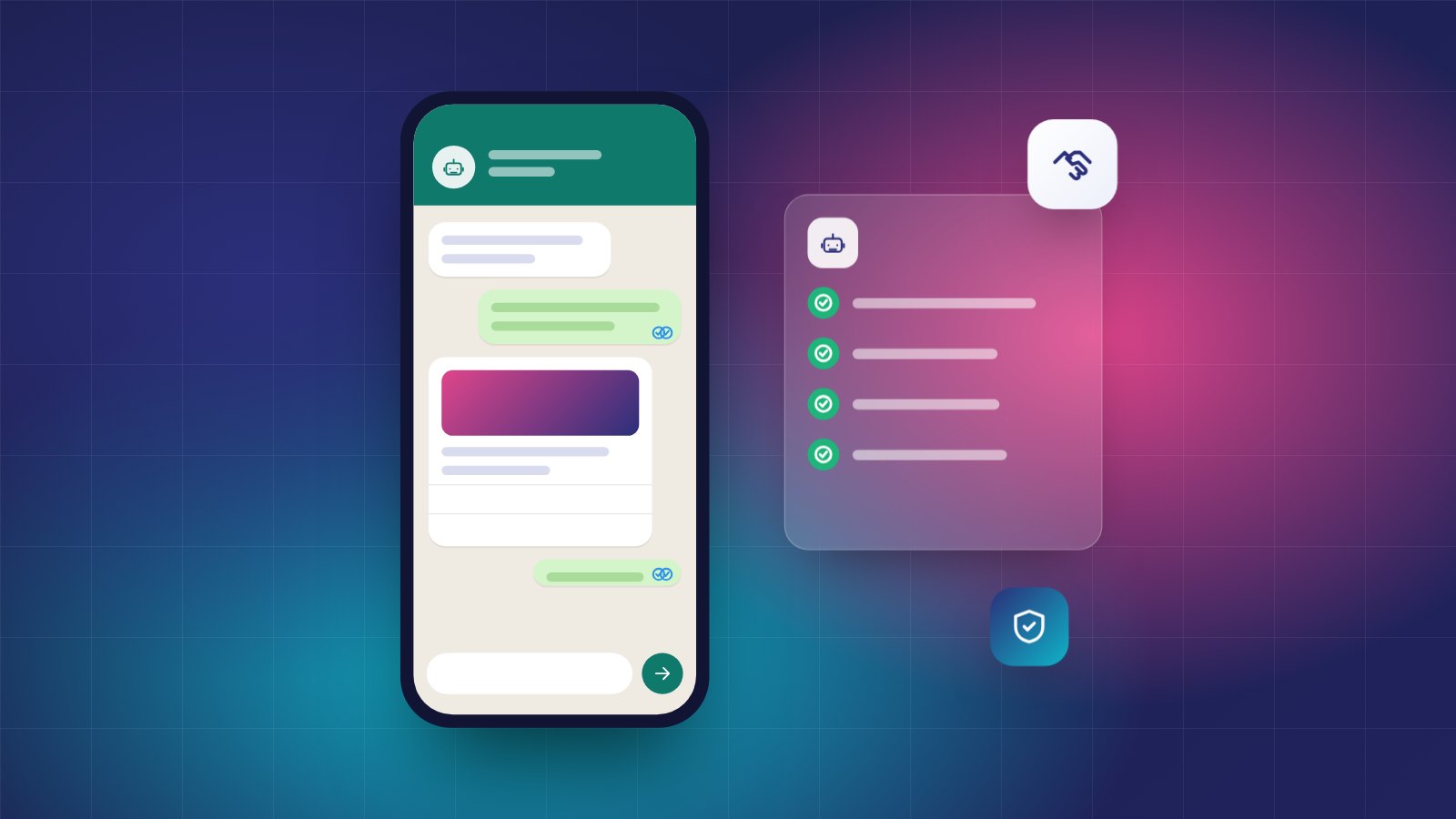
- Multi-channel assistant: the same knowledge base on the website plus a messaging channel such as WhatsApp or Facebook Messenger, with a shared inbox for human handover.
- Workflow agent: takes actions, such as booking a slot, creating a ticket or drafting a quote for staff review. Sell this only after the client has used a simpler assistant and the rules are written down.
- Monthly care plan: content updates, review of real conversations, accuracy re-tests after model or website changes, and a short report. This is the recurring revenue.
Avoid selling "a bot that replaces your front desk" or anything that makes decisions on refunds, eligibility, medical or legal matters. Those promises are hard to deliver and easy to regret.
Who is responsible when the chatbot gets it wrong?
The business is, and your contracts should assume that. The case agencies should know is Moffatt v. Air Canada, decided by British Columbia's Civil Resolution Tribunal in February 2024. The airline's website chatbot told a customer he could claim a bereavement fare reduction after booking, which contradicted the actual policy. Air Canada argued, among other things, that the chatbot was responsible for its own statements. The tribunal rejected that, held the airline liable for negligent misrepresentation and ordered it to compensate him. It was a small tribunal claim in Canada, not a US court ruling, but it is widely cited because the reasoning is simple: a chatbot on your site is part of your site.
US regulators take a similar line on marketing claims. When the FTC launched Operation AI Comply in September 2024, its chair said there is no AI exemption from existing law. One of the first cases involved a service that called itself a robot lawyer without testing whether it performed like one. A 2026 law firm review of the program notes the FTC has kept bringing these cases and has revived the idea that a company supplying deceptive marketing to others can also be liable. For an agency, that means two things: do not overstate what a client's bot can do in its marketing, and do not overstate what your product does in your own pitch.
Do you have to tell users they are talking to a bot?
Make disclosure the default everywhere. California's bot law makes it unlawful to use a bot to mislead someone in California about its artificial identity in order to influence a purchase or a vote, and it protects businesses that disclose clearly and conspicuously. Other states have passed or proposed their own AI disclosure rules, and they keep changing, so a plain label such as "AI assistant" in the chat header and in the first message is the simplest way to stay on the right side of all of them. It also sets honest expectations, which reduces complaints.
What guardrails should every build include?
Put these in your statement of work so they are built and tested, not assumed:
- A written answer scope: the pages, PDFs and FAQs the assistant may use, and a list of topics it must decline, such as prices not on the site, legal or medical advice and promises about delivery dates.
- Grounding: answers come from that content, and when nothing relevant is found the bot says so and offers a person instead of guessing.
- Human handover: a clear route to email, phone or live chat, and an automatic handover after repeated confusion or any complaint.
- Prompt injection defenses: OWASP still lists prompt injection first in its 2026 Top 10 for LLM applications. Keep credentials and actions in application code, give the bot the least access it needs, and require a person to approve anything that changes data or sends messages externally.
- A test set of 50 to 100 real questions taken from the client's inbox and call notes, run before launch and again after each change, with the results kept on file.
- Privacy settings: use business API accounts, check the vendor's data terms (OpenAI, for example, says it does not train on API business data by default), avoid collecting more personal data than the job needs, and link the client's privacy policy in the widget.
- Accessibility: the widget must work with a keyboard and a screen reader, have visible focus states and enough contrast, because it is part of the client's site.
How should you scope and price a chatbot build?
Price the build and the running cost separately, and be explicit about both. The build covers content gathering, configuration, integrations, testing and handover documents. Running cost has two parts: model usage, which grows with the number of conversations and the model chosen, and the care plan. A few practical rules from our delivery work:
- Cap the knowledge base in the quote, for example a set number of pages and documents. Larger sources take longer to clean and test.
- Count every integration separately. A CRM, calendar or helpdesk connection is where builds overrun.
- Bill model usage at cost, or put it on the client's own vendor account, so nobody is surprised when traffic grows.
- Include one revision round after the first week of real conversations. That is when the gaps show up.
- Turn every launch into a care plan. An assistant that nobody reviews slowly drifts out of date as prices, staff and policies change.
What should you agree with a white-label partner?
The usual white-label terms apply: NDA, IP assignment on payment, no contact with your client and no partner branding anywhere. AI work adds a few specific points:
- Whose vendor accounts hold the API keys and conversation logs. The safest answer is the client's or the agency's, never the partner's personal account.
- Where conversation data is stored, how long it is kept and who can read it.
- The test set and results are delivered with the build, so you can rerun them later.
- Which model and version is used, and how changes are approved, since a model update can change answers.
- A written list of what the assistant will not do, signed off by your client before launch.
A simple way to launch your first one
Start with a client who has good website content and a steady flow of repetitive questions. Build a website assistant only, label it clearly, run it with handover to a person, and review the first 100 conversations together. Use what you learn to write your standard scope, your test checklist and your care plan, then offer it to the next client. One careful launch teaches more than a big menu of AI services you cannot yet support.
If you want delivery capacity for this, our senior team builds white-label assistants and agents on Claude, OpenAI or Gemini, tested against real questions and documented under your brand. The details are on the white-label AI chatbot page at https://isharptech.com/partners/white-label-ai-chatbot-development, and the full partner program is at https://isharptech.com/partners.
Frequently asked questions
Can an agency resell AI chatbots without in-house AI developers?
Yes. The agency owns the client relationship, the scope and the sign-off, and a white-label partner handles the build, testing and maintenance. The agency still needs someone who understands the guardrails well enough to explain them to the client.
Is a business liable for what its chatbot tells customers?
Generally it should assume so. In Moffatt v. Air Canada (2024), a Canadian tribunal held the airline responsible for wrong information its website chatbot gave a customer, rejecting the argument that the bot was responsible for itself. This is not legal advice; clients should check with their own lawyer.
Do chatbots need to disclose that they are AI?
Disclosure is the safe default. California's bot law bars using an undisclosed bot to mislead people about its artificial identity to influence a sale, and some other states have their own AI disclosure rules. A clear AI assistant label in the chat window covers this simply.
How do you stop a chatbot from making things up?
Limit it to approved content, tell it to decline when the answer is not there, hand over to a person for anything sensitive, and test it against real customer questions before launch and after every change.
Sources
- ABA Business Law Today: BC tribunal confirms companies remain liable for information provided by AI chatbot
- FTC: FTC announces crackdown on deceptive AI claims and schemes (Operation AI Comply)
- Holland & Knight: Operation AI Comply two years later
- California Business and Professions Code section 17941 (bot disclosure)
- OWASP Gen AI Security Project: LLM01:2026 Prompt Injection
- OpenAI: Business data privacy, security and compliance
AI Agents & Automation: Chatbots, AI search and agents that do real work, grounded in your own documents and data.